
Room Four
What Repair
Would Require.
Repair is not the same thing
as acknowledgment.
as acknowledgment.
Responsibility · Restitution · Repair
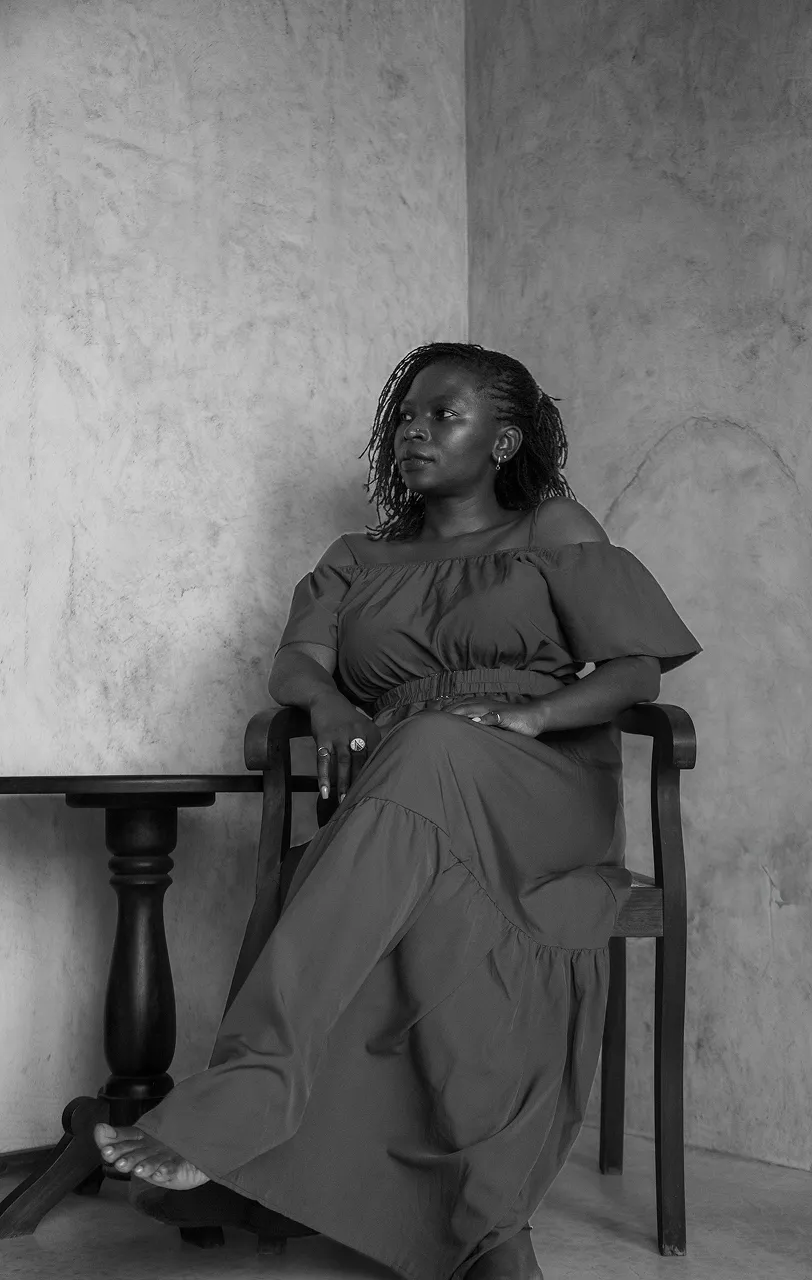
There are no shortages of stories that can be told. Living life as a Black woman was a story within itself. Everyone wants to tell you everything about you through their eyes and no one just asks about you. There seems to be a thousand and one categories for me but none of them say "just me." It may seem like a simple phrase, but rarely do you hear anyone say that to describe themselves. Especially not a Black woman, as there must be some stereotype that I can fit into to justify the space I take up.
I remember being part of a group of women in an online creative class. I was the only Black woman, which happened often enough in those spaces that I had stopped being surprised by it. The white women all seemed kind. They also all gave me the same quiet feeling. Okay. What is she doing here.
There is a particular kindness that is not kindness at all. It arrives smooth and rehearsed, like a showroom of dolls who learned the same script. The smiles matched. The voices matched. The careful, sing-song politeness matched. And underneath all that matching was a question they would never say out loud and never have to. They had been built for that room. I had been let into it.
This is sometimes hard to explain to anyone who has not lived it. Nobody said anything cruel. No one ever does. The harm does not come dressed as harm. It comes as a compliment with a hook in it. A surprised "oh, you're a writer?" A correction offered before a question is even asked. An assumption laid down so gently that you are made to feel unreasonable for noticing it at all. Microaggression is a clinical word for something that feels like a thousand small cuts no one feels but you. You are welcomed and removed in the same breath.
And when you name it, the room rearranges itself in disbelief that you noticed. The woman who caused the discomfort becomes the one who is hurt. Her feelings become the emergency. Her innocence becomes the thing that must be protected. She gets to be oblivious and wounded at once, the villain and the victim, while you are asked to manage her tears and apologize for your own clarity. I have watched this happen so many times that I can feel it coming the way arthritis sufferers feel the weather change before anything actually happens. .
People hear "reparations" and think only about land, money, and policy, and those things matter. But there is a smaller, daily ledger that never gets settled. It is the accounting of human decency and who is believed. Who is allowed to take up space without explaining themselves. Who gets to be ordinary. Repair is not only what is owed for what was stolen long ago. It is also the willingness to stay in the room when you are told you have caused harm, and to not make your own comfort the topic of the conversation. Accountability is letting the question "what is she doing here" be answered honestly. She is doing exactly what you are doing. The room was simply built to make you doubt her place in it.
I left that class the way I leave most rooms like it. Intact, but counted. Sorted into one of the thousand and one categories that were waiting for me before I ever logged on. I am still looking for the room where I get to be the simplest thing of all. Not the only one. Not the exception. Not the lesson. Just me. But then again no one has been conditioned to see any of is like that. Boxes and categories is how we process information about people. The issue is who gets to label the boxes and categories for everyone.
What gets lost first is the work itself. I went into that class to make something. Instead I spent the hours making myself smaller and easier to be around. Creativity needs a kind of safety to move freely, and that safety was never extended to me. So the poem I might have written became energy spent reading the room. The risk I might have taken became caution. You cannot create at full volume while you are also monitoring the temperature of everyone around you. That is the first theft. The thing you came to build, traded for the work of being tolerable.
The expectation is the editing. You are supposed to file yourself down. Round the edges. Lower your voice. Soften the truth so it lands gently on people who have never once had to soften anything for you. Be palatable. That is the unspoken price of admission, and you are billed for it whether you pay or not.
Because when you refuse, when you simply show up as yourself, the room does not stay neutral. There is a punishment for being unedited. Sometimes it is the cold shift in tone, the sudden distance, the email that stops getting answered, the reputation that arrives in the next room before you do. Sometimes it is louder than that. Sometimes it is open vitriol dressed up as feedback. The kindness was always conditional. It was a reward for performing smallness, and the moment you stop performing, you learn exactly what it was guarding.
This is what the body actually keeps score of. Not only the harm done to you, but everything you refused to perform and the cost you paid for refusing. Every time you chose your own voice over someone else's comfort. Every time you declined to soothe a fragile ego that mistakes your full presence for an attack. White supremacy is fragile in precisely this way. It asks to be centered and protected, and it punishes you for noticing that you are doing the protecting. The body remembers every one of those bills.
The afterlife of this harm is a tax that never stops being collected. You pay it in the rooms you stop entering and the ones you enter already armored. You pay it in your body, which holds the tension of every truth you swallowed and every one you finally said out loud. And the younger women watch, and they learn the math early. They learn that being yourself has a price, then decide whether they can afford it. That is the harm that outlives the moment. Not the single slight, but the lifelong bill for refusing to disappear.
The country is about to celebrate a birthday. Two hundred and fifty years. There will be fireworks and speeches about freedom and a story the nation loves to tell about itself. But a house does not get to celebrate its anniversary without accounting for who built it and who was never allowed to live in it. That is the conversation the United States keeps avoiding. You cannot honor a foundation while refusing to look at what is buried in it.
Across everything I write, I keep returning to one truth. The harm done to Black communities is not history. It is present tense. It lives in the body as emotional muscle memory, the flinch that arrives before the threat. It lives in the unnatural habitats we are forced to call home, the rooms built for someone else that we are only ever let into. It lives in the daily ledger of who is believed, who is protected, who is allowed to take up space without explaining themselves. Black women remain the most unprotected species in this country, punished for telling the truth and punished again for surviving it. The harm did not end. It only changed clothes.
So when this nation asks what it owes, acknowledgment is the floor, not the ceiling. An apology that changes nothing is just a better-mannered version of the same harm. Meaningful repair would require this country to stop protecting the very systems that produced the wound.
It would mean changing the actual makeup of every governing body until it reflects what this country truly looks like and answers to all of its people, not a fraction of them. It would mean dismantling white supremacy and the institutions it built, the ones designed to keep certain people braced and certain people comfortable. And then it would mean starting new, with a different priority at the center. Not the preservation of power, but the healing of Black people and the repair of our culture, our memory, our health, and everything taken while the country called itself free.
Two hundred and fifty years is long enough to know the house cannot keep standing on a buried foundation. Repair is not a renovation. It is rebuilding so that everyone finally gets to live inside it, and walk freely, in a country that was supposed to be theirs all along.
I have spent much of my life noticing who is expected to care, endure, or disappear.
As a Black Caribbean woman and death doula, I think often about the relationship between care and power. Death has given me a perspective that few people are willing to sit with. When someone is dying, the structures underneath families become clear as day. Who shows up. Who carries responsibility. Who has resources. Who is trusted. Who is forgotten.
I keep coming back to one question:
Why have Black women historically been trusted with caring for everyone else’s families, but rarely trusted with shaping the systems that determine whose lives are protected?
Throughout American history, Black women have cared for children, homes, aging parents, communities, and people at the end of life. We are often welcomed into the most intimate spaces of people’s lives during their most vulnerable moments. But that trust has rarely translated into protection, investment, or power for ourselves.
We are close enough to sustain households, but often excluded from the systems that decide what care looks like.
As a death doula, I see this contradiction continue. End-of-life care is often treated as a personal responsibility, but access to support is shaped by wealth, race, and resources. Families with financial means can access additional support, while many caregivers, especially women, immigrants, and people from marginalized communities, carry immense emotional and physical labor without recognition or relief.
I also think about the connection between birth and death. We have begun having more conversations about Black maternal mortality and the need for birth doulas because Black women have experienced preventable harm while bringing life into the world. I wonder why we have not had the same urgency around supporting Black women and communities through death, caregiving, and grief.
The same people society depends on to care for the vulnerable are often the same people society has failed to care for.
That is the unresolved harm I continue to witness: a society that relies on care labor while undervaluing the people providing it.
What was lost was not only economic opportunity. It was time, safety, rest, and the ability to be cared for in return.
For generations, Black women have been expected to survive through responsibility. Many have become caregivers, providers, and emotional anchors for families and communities while their own needs are minimized. The expectation to be strong has often replaced the opportunity to be supported.
I see this in caregiving spaces today. The person who answers every phone call, coordinates appointments, manages medications, communicates with family members, and holds everyone together often becomes invisible once the crisis passes.
They are praised for being strong, but strength is not the same as support.
For many immigrant and first-generation families, caregiving is also connected to survival. Many women leave behind their own communities, families, and support systems to provide care for others while sending resources back home. Care becomes a responsibility before it becomes a choice.
The afterlife of this harm appears in many ways: exhaustion passed through generations, mistrust of institutions, difficulty asking for help, and the belief that rest must be earned.
We have created systems where the people most responsible for caring for others often have the least access to care themselves.
What does it mean for a society to depend on people it has never fully protected?
Meaningful repair requires more than acknowledgment. It requires changing the conditions that continue producing the same harms.
The United States must be willing to examine how historical exploitation continues through present-day systems: healthcare, caregiving, housing, wealth, labor, and access to support.
Repair requires recognizing that care is not invisible work. It is infrastructure.
The people who care for children, aging adults, disabled people, and dying people are holding communities together. Their labor should not only be appreciated during moments of crisis. It should be valued, protected, and compensated.
For Black communities, repair would require investment in systems that allow people to live and age with dignity. It would require healthcare systems that listen to Black women, support caregivers, and recognize the impact of generations of medical neglect and institutional mistrust.
It would require expanding our understanding of care beyond individual responsibility and recognizing the role communities play in sustaining life.
I also believe repair requires listening to the people who have been closest to harm. The people who have witnessed what happens when systems fail are often the ones with the clearest understanding of what needs to change.
A country cannot celebrate its future while refusing to fully confront what its most vulnerable communities have carried.
As a black women who loves nature, I was surprised by the lack of women who look like me in the outdoors industry, so I went about telling my/our story in the outdoors. The Buffalo Soldiers, Harriet Tubman and others who forged a path for me, are my inspiration. I'm often referred to as the troublemaker of the indutry and I accept that. I meet with CEO's often and it's my story of connecting with nature they often see as a "sepcial Edition" article, versus the norm. Black folks like me have always been apart of nature , but when you don't see our images or hear our stories, we are always looked upon as an "add on", not not main person in the stories told. The work I do, chages that narrative and makes it common, so that those who are to follow have less obstacles as I've had.
Black women as CEO's in the outdoor idustry, is unheard of. We often never see opportunity because the indistry doesn't look to us as the leaders, so when young black women seek the outdoor industry as a career path, they are discouraged in not seeing other women who look like them. This is yet another obstacles to black folk working on matters of environmental protection and retaining their history and connections to nature.
This country needs to address these issues beyong just speaking on them, they need to act of the divide that has carried over for 250 years. Speaking on a problem as it relates to race, is what this country is good at. The shortcoming is in putting action behind those words. Another 250 years will pass and the conversation(s) will be the only path we chosen, if we do not act.
As a black women who loves nature, I was surprised by the lack of women who look like me in the outdoors industry, so I went about telling my/our story in the outdoors. The Buffalo Soldiers, Harriet Tubman and others who forged a path for me, are my inspiration. I'm often referred to as the troublemaker of the indutry and I accept that. I meet with CEO's often and it's my story of connecting with nature they often see as a "sepcial Edition" article, versus the norm. Black folks like me have always been apart of nature , but when you don't see our images or hear our stories, we are always looked upon as an "add on", not not main person in the stories told. The work I do, chages that narrative and makes it common, so that those who are to follow have less obstacles as I've had.
As a Black woman in America, I’ve grown increasingly baffled by the dismay and resentment towards Black women who are the product of the American Dream. Wasn’t achieving the American Dream the goal or one of the goals post-Civil Rights Movement, in addition to voter rights, the end of segregation, the commencement of equitable pay, and access to fair housing?
My parents are first generation college graduates. They grew up in a time where they navigated others’ limiting discriminatory beliefs and practices. They grew up during a time in the American Northeast where, as young adults, the cost of living was affordable. Childcare was reasonable. And opportunities for career advancement existed for Black people – even in gender segregated fields. Their parents sacrificed so that they could have a promising future.
Yet, several decades later, as a transplant to the American South, I have felt the brunt of racism from the hearts and minds of some white folks born and raised in the Jim Crow South. I have been disregarded by genteel white Southern belles, raised in all white communities, who perpetuate biases against the Black talented tenth. They stifle the brilliance and aptitude of Black women leaders who have smooth brown skin, minimal gray hair, and confidence that radiates like the sun.
These Southern belles want to squash our light, our progress, our purpose, our presence, and our excellence. Black achievement is a foreign concept to them. Tokenism keeps them comfortable and in positions of power and wealth hoarding. The “whites only” sign still exists; it just looks and sounds different.
When we, the talented tenth, are hired by or work alongside some other Black professional women, we quickly learn about the two Black Americas – the haves and the have nots. Those who grew up low-income and those who did not. Those who identify who their people are based on the depth of their trauma bonding, frequency of code switching in the workplace, and what low-income neighborhood they grew up in. Some Negroes bond because of slave mentalities and blind loyalty rather than connecting with other sisters with an abundance mindset, liberation theology, and a deep love ethic. Some Negroes believe your childhood zip code and parading unhealed emotional wounds are the only ways to certifiably carry that all-inclusive monolithic Black card. So, empowered chocolate, mocha, and sienna-complected folk, who graduated from top-ranking HBCUs are seen as questionable outsiders. And those of us who grew up in pristine majority white suburbs, attended Jack and Jill programs or summer camps, and went on summer vacations are seen as Oreos and less Black.
Yet we, Black women, are products of the American Dream. Many of the Black middle class and upper class know that there is diversity in Blackness. The social class we were born into and raised in does not make us immune to racism, sexism, or classism. We still have to navigate glass ceilings and glass cliffs despite our earned credentials. We know from lived experience that some white professionals and some white soccer moms will corner us and drill us to determine our social standing and to decipher if we grew up in nuclear homes and all of the ways they ask, “Are you a wealthy Negro or a poor Negro?” The answer we give, demonstrating that we grew up solid middle class, ushers us into their comfort zone. We are admitted into their club. Or our admission of being the product of the American Dream unnerves them as they widen their eyes in disbelief when they recognize some Black folk made it off massa’s plantation. And our excellence is the standard and not the exception.
These are some of the nuances, low expectations, and stereotypes second, third, even fourth generation Black college graduates of middle class and upper class backgrounds face in the land of opportunity. There is the assumption that we achieved success with ease and every privilege. That is a myth. It is assumed that conventionally attractive Black women with “nice hair”, a cute figure, and book smarts have the world at their feet. Yet many of us understand the ways in which we are privileged and the ways we are not. We see with our chestnut brown or hazel eyes, how we are consistently invisibilized in work spaces and other public settings, in spite of our demonstrated brilliance and humanity.
We refuse to be pushed aside or confined to a box. We, Black women, will dream anew. And we will prosper on our own terms.
There have been interruptions in my career advancement, planting roots in one community for the long-term, relationship fragmentation, and slow progress in my wealth building. These are challenges I continue to identify and navigate through.
Meaningful repair would require that white people who financially and physically benefitted from Transatlantic slavery, segregation, white privilege, and white supremacy would own those facts and the history. And they would apologize to the Black and indigenous people in America for these forms of harm. And they would stop perpetuating and supporting systems of oppression that they benefit from that deeply harm BIPOC people. Mass incarceration would end. Redlining would be undone. White people in positions of power would listen to BIPOC people and actually share power, wealth, and resources in equitable and sustainable ways. All of the money that was stolen from Black union soldiers and free Blacks that were put in freeman's savings banks during Reconstruction would be given back to their descendants and include free tuition to colleges and universities of Black students' choices.
As a Black woman in America, I’ve grown increasingly baffled by the dismay and resentment towards Black women who are the product of the American Dream. Wasn’t achieving the American Dream the goal or one of the goals post-Civil Rights Movement, in addition to voter rights, the end of segregation, the commencement of equitable pay, and access to fair housing?
My parents are first generation college graduates. They grew up in a time where they navigated others’ limiting discriminatory beliefs and practices. They grew up during a time in the American Northeast where, as young adults, the cost of living was affordable. Childcare was reasonable. And opportunities for career advancement existed for Black people – even in gender segregated fields. Their parents sacrificed so that they could have a promising future.
Yet, several decades later, as a transplant to the American South, I have felt the brunt of racism from the hearts and minds of some white folks born and raised in the Jim Crow South. I have been disregarded by genteel white Southern belles, raised in all white communities, who perpetuate biases against the Black talented tenth. They stifle the brilliance and aptitude of Black women leaders who have smooth brown skin, minimal gray hair, and confidence that radiates like the sun.
These Southern belles want to squash our light, our progress, our purpose, our presence, and our excellence. Black achievement is a foreign concept to them. Tokenism keeps them comfortable and in positions of power and wealth hoarding. The “whites only” sign still exists; it just looks and sounds different.
When we, the talented tenth, are hired by or work alongside some other Black professional women, we quickly learn about the two Black Americas – the haves and the have nots. Those who grew up low-income and those who did not. Those who identify who their people are based on the depth of their trauma bonding, frequency of code switching in the workplace, and what low-income neighborhood they grew up in. Some Negroes bond because of slave mentalities and blind loyalty rather than connecting with other sisters with an abundance mindset, liberation theology, and a deep love ethic. Some Negroes believe your childhood zip code and parading unhealed emotional wounds are the only ways to certifiably carry that all-inclusive monolithic Black card. So, empowered chocolate, mocha, and sienna-complected folk, who graduated from top-ranking HBCUs are seen as questionable outsiders. And those of us who grew up in pristine majority white suburbs, attended Jack and Jill programs or summer camps, and went on summer vacations are seen as Oreos and less Black.
Yet we, Black women, are products of the American Dream. Many of the Black middle class and upper class know that there is diversity in Blackness. The social class we were born into and raised in does not make us immune to racism, sexism, or classism. We still have to navigate glass ceilings and glass cliffs despite our earned credentials. We know from lived experience that some white professionals and some white soccer moms will corner us and drill us to determine our social standing and to decipher if we grew up in nuclear homes and all of the ways they ask, “Are you a wealthy Negro or a poor Negro?” The answer we give, demonstrating that we grew up solid middle class, ushers us into their comfort zone. We are admitted into their club. Or our admission of being the product of the American Dream unnerves them as they widen their eyes in disbelief when they recognize some Black folk made it off massa’s plantation. And our excellence is the standard and not the exception.
These are some of the nuances, low expectations, and stereotypes second, third, even fourth generation Black college graduates of middle class and upper class backgrounds face in the land of opportunity. There is the assumption that we achieved success with ease and every privilege. That is a myth. It is assumed that conventionally attractive Black women with “nice hair”, a cute figure, and book smarts have the world at their feet. Yet many of us understand the ways in which we are privileged and the ways we are not. We see with our chestnut brown or hazel eyes, how we are consistently invisibilized in work spaces and other public settings, in spite of our demonstrated brilliance and humanity.
We refuse to be pushed aside or confined to a box. We, Black women, will dream anew. And we will prosper on our own terms.
Softness or Survival? Do we have to choose?
When I first began exploring my femininity, I thought I was simply discovering my style.
I started buying makeup. I learned about color theory. I watched videos about finding clothes that made me feel beautiful. I may have even fallen victim to a little too much blush because apparently, I have blush blindness. I experimented with jewelry, different hairstyles, and little details that made me feel more like myself.
At first, it felt like I was having fun.
But somewhere between choosing Fenty Beauty or Juvia's Place, I realized I wasn’t just learning how I wanted to look. I was asking myself a much bigger question.
What does it mean for me to be feminine as a Black woman?
I am still learning.
The more I explore femininity, the more I wonder how much of who I am was shaped by me and how much was inherited. I think about the women who came before me. Women whose lives demanded strength long before they were ever given the freedom to choose softness.
Our ancestors did not have the privilege of showing up only for themselves. Their survival often depended on their ability to endure. They cared for children, families, and communities while carrying burdens that should never have been theirs to bear. Throughout history, Black women have stood on the front lines of movements, protected those around them, held families together, and found ways to keep going even when the world offered little care in return.
They had to be resilient because survival required it.
Even today, women are often expected to nurture everyone around them before nurturing themselves. Black women know this expectation especially well. We are praised for being dependable, selfless, and strong. We are taught to show up, to carry the weight, to solve the problem, to hold everything together. Somewhere along the way, many of us were taught that our own needs can wait.
Sometimes I wonder if what I call independence is actually inherited survival.
Growing up, I learned to admire strength. Strength was something to aspire to. It protected us. It carried generations forward. But I do not remember softness being celebrated in quite the same way. Softness often felt like something that belonged to someone else. Something that could only exist after every responsibility had been met.
As I have gotten older, I have started asking myself questions I never expected a new dress or a makeup routine would uncover.
Why does embracing femininity sometimes feel unfamiliar?
Why do I instinctively feel the need to prove my competence before allowing myself to be gentle?
Why do I feel guilty for wanting beauty, rest, tenderness, or ease?
I do not think those questions came from nowhere. I think history has a way of settling into us. The expectations placed on Black women did not disappear with time. They became stories we inherited about who we have to be in order to deserve love, respect, and safety.
I do not believe strength is the problem.
The women who came before me were strong because they had to be. Their strength is the reason I am here. It is because of them that I have the freedom to ask questions they never had the luxury of asking.
What I question is why it still feels as though strength and softness cannot exist together.
Why does softness feel like something that has to be earned?
Why does choosing myself sometimes feel like I am abandoning the women who taught me how to survive?
Maybe repair is not only about acknowledging the harms of the past. Maybe repair is also giving ourselves permission to become women who no longer have to choose between resilience and tenderness. Maybe repair is allowing Black women to be seen as whole. Capable and cared for. Ambitious and gentle. Strong and soft.
I am still learning how to navigate my femininity as a Black woman. Every dress I buy, every shade of blush I wipe off because I definitely put on too much, every moment I choose rest instead of proving myself, feels like another small step toward understanding who I am outside of survival.
Perhaps that is what this journey really is.
Not becoming someone new.
But making space for the parts of myself that may have always been there, waiting for a time when surviving was no longer the only way to exist.
I believe what was interrupted was the freedom for many Black women to exist without feeling that our worth is tied to what we can carry. Generations of Black women endured circumstances that required extraordinary resilience. Their ability to survive became essential, but I wonder what was sacrificed in the process. Rest. Vulnerability. The freedom to prioritize themselves without guilt. The ability to be seen as both strong and soft.
I don’t think those expectations disappeared with history. I think they were inherited. Today, I still see how Black women are praised for being selfless, dependable, and endlessly capable. We are often expected to show up for everyone before ourselves, and many of us internalize the belief that our needs should come last. While this expectation is one many women experience, it has unique historical weight for Black women whose labor, caregiving, and strength have so often been demanded rather than simply appreciated.
For me, these effects appear in quiet ways. I notice them when I feel guilty for resting. When I feel the need to prove my competence before allowing myself to be vulnerable. Even my journey into femininity has become an exercise in questioning what I inherited. I ask myself whether discomfort with softness comes from who I am or from generations of women who did not have the luxury of embracing it.
I don’t believe the answer is abandoning strength. Strength is part of my inheritance, and I honor it. What I hope to reclaim is the belief that strength and softness can coexist. That caring for myself is not a rejection of the women who came before me, but an extension of what they hoped future generations might one day do.
As the United States approaches its 250th anniversary, I cannot help but ask what exactly we are celebrating when Black Americans are still living with the consequences of more than 400 years of enslavement, followed by generations of legalized discrimination and inequality. Celebration without honest reflection feels incomplete.
I want this country to remember that Black Americans helped build it. Our ancestors’ labor built its wealth, its infrastructure, and its institutions. Their contributions should never be treated as a footnote or a chapter that can be removed when it becomes uncomfortable. Attempts to erase or minimize Black history do not change the truth.
To me, repair begins with accountability. It requires acknowledging that Black Americans have never been afforded equal opportunities in practice, even when equality has been promised in principle. The effects are still visible today. Black workers, on average, continue to earn less than many of their peers. Black families continue to face barriers to building wealth, including disparities in homeownership, lending, and access to capital. These are not simply individual struggles. They are the afterlife of policies and systems that were intentionally unequal.
Meaningful repair is about more than remembering history once a year. It is about protecting that history, teaching it honestly, and refusing to erase the people who shaped this country. It is about investing in communities that have been historically excluded, ensuring equitable access to education, housing, healthcare, and economic opportunity, and having serious conversations about reparative policies.
I often joke with my friends that I still want my “40 acres and a mule,” but beneath the humor is a real question. What does this country owe the people whose labor helped build it? The promise was never fulfilled, and the conversation about repair is far from over.
Juneteenth becoming a federal holiday was meaningful because it recognized a truth that should never have been ignored. But recognition is only the beginning. Repair requires more than remembrance. It requires action.
Softness or Survival? Do we have to choose?
When I first began exploring my femininity, I thought I was simply discovering my style.
I started buying makeup. I learned about color theory. I watched videos about finding clothes that made me feel beautiful. I may have even fallen victim to a little too much blush because apparently, I have blush blindness. I experimented with jewelry, different hairstyles, and little details that made me feel more like myself.
At first, it felt like I was having fun.
But somewhere between choosing Fenty Beauty or Juvia's Place, I realized I wasn’t just learning how I wanted to look. I was asking myself a much bigger question.
What does it mean for me to be feminine as a Black woman?
I am still learning.
The more I explore femininity, the more I wonder how much of who I am was shaped by me and how much was inherited. I think about the women who came before me. Women whose lives demanded strength long before they were ever given the freedom to choose softness.
Our ancestors did not have the privilege of showing up only for themselves. Their survival often depended on their ability to endure. They cared for children, families, and communities while carrying burdens that should never have been theirs to bear. Throughout history, Black women have stood on the front lines of movements, protected those around them, held families together, and found ways to keep going even when the world offered little care in return.
They had to be resilient because survival required it.
Even today, women are often expected to nurture everyone around them before nurturing themselves. Black women know this expectation especially well. We are praised for being dependable, selfless, and strong. We are taught to show up, to carry the weight, to solve the problem, to hold everything together. Somewhere along the way, many of us were taught that our own needs can wait.
Sometimes I wonder if what I call independence is actually inherited survival.
Growing up, I learned to admire strength. Strength was something to aspire to. It protected us. It carried generations forward. But I do not remember softness being celebrated in quite the same way. Softness often felt like something that belonged to someone else. Something that could only exist after every responsibility had been met.
As I have gotten older, I have started asking myself questions I never expected a new dress or a makeup routine would uncover.
Why does embracing femininity sometimes feel unfamiliar?
Why do I instinctively feel the need to prove my competence before allowing myself to be gentle?
Why do I feel guilty for wanting beauty, rest, tenderness, or ease?
I do not think those questions came from nowhere. I think history has a way of settling into us. The expectations placed on Black women did not disappear with time. They became stories we inherited about who we have to be in order to deserve love, respect, and safety.
I do not believe strength is the problem.
The women who came before me were strong because they had to be. Their strength is the reason I am here. It is because of them that I have the freedom to ask questions they never had the luxury of asking.
What I question is why it still feels as though strength and softness cannot exist together.
Why does softness feel like something that has to be earned?
Why does choosing myself sometimes feel like I am abandoning the women who taught me how to survive?
Maybe repair is not only about acknowledging the harms of the past. Maybe repair is also giving ourselves permission to become women who no longer have to choose between resilience and tenderness. Maybe repair is allowing Black women to be seen as whole. Capable and cared for. Ambitious and gentle. Strong and soft.
I am still learning how to navigate my femininity as a Black woman. Every dress I buy, every shade of blush I wipe off because I definitely put on too much, every moment I choose rest instead of proving myself, feels like another small step toward understanding who I am outside of survival.
Perhaps that is what this journey really is.
Not becoming someone new.
But making space for the parts of myself that may have always been there, waiting for a time when surviving was no longer the only way to exist.
Black communities have been paying the cost of their own exclusion for generations. The institution created the exclusion and the black body inherited the labor of correcting it. We know how to adjust. How to alter. How to make do. How to enter spaces that did not imagine us, and once inside, figure out how to remain. While there is resilience in that, I often wonder what it has actually cost us to be so good at surviving things that should’ve changed a long time ago. Ten Toes Down began as a reflection on the absence of proper representation for black and brown bodies in ballet. But the deeper I moved into the work, the more I began to see our pointe shoe as something larger. For generations, the standard pointe shoe was made in shades meant to disappear against white skin. Black dancers ritually painted, pancaked and altered their shoes. Their bodies were capable, discipline was present, and artistry undeniable, yet they were still forced to adjust themselves. I think black communities are still carrying this.
We carry the knowledge of how to prepare ourselves for rooms that aren’t prepared for us and we pass down instructions for survival. But survival and repair are not the same thing. What has never been fully repaired is the burden of adaptation. There is a quiet expectation that black people will just continue to find a way. That we will alter the shoe, code switch, work twice as hard, make ourselves legible, endure discomfort and disregard, and still continue to create, excel and thrive.
When I imagine repair, I imagine black people entering spaces without first being taught how to survive them. I imagine our children inheriting more than our resilience and stories about how we made a way out of no way. Repair to me is not simply opening the door and allowing us to enter. It is asking who designed the room. Reparations are not only about accounting for what was taken from us, but for the unpaid labor of adaptation black people have performed to survive the absence of repair and this immense amount of inherited debt.
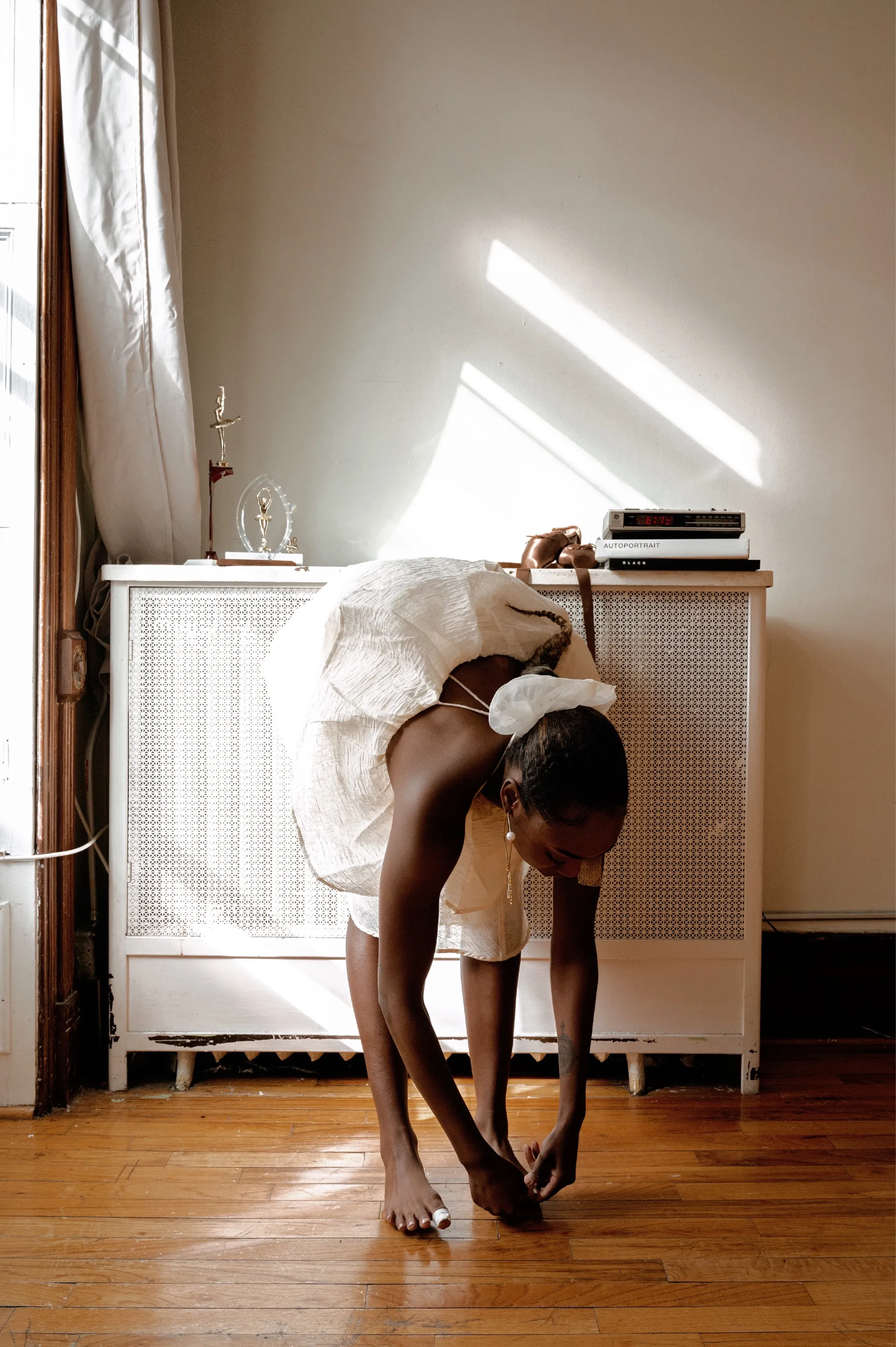
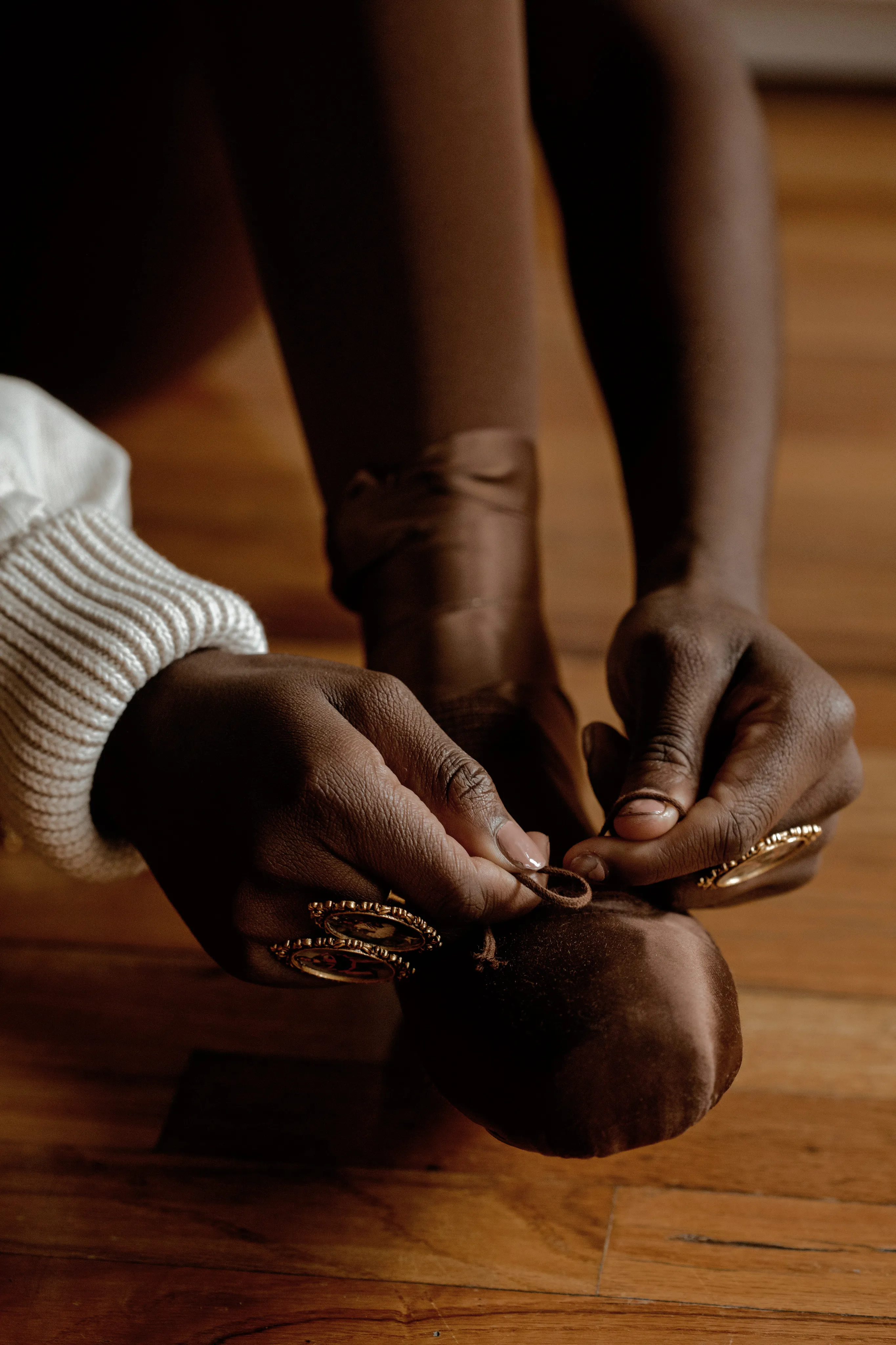
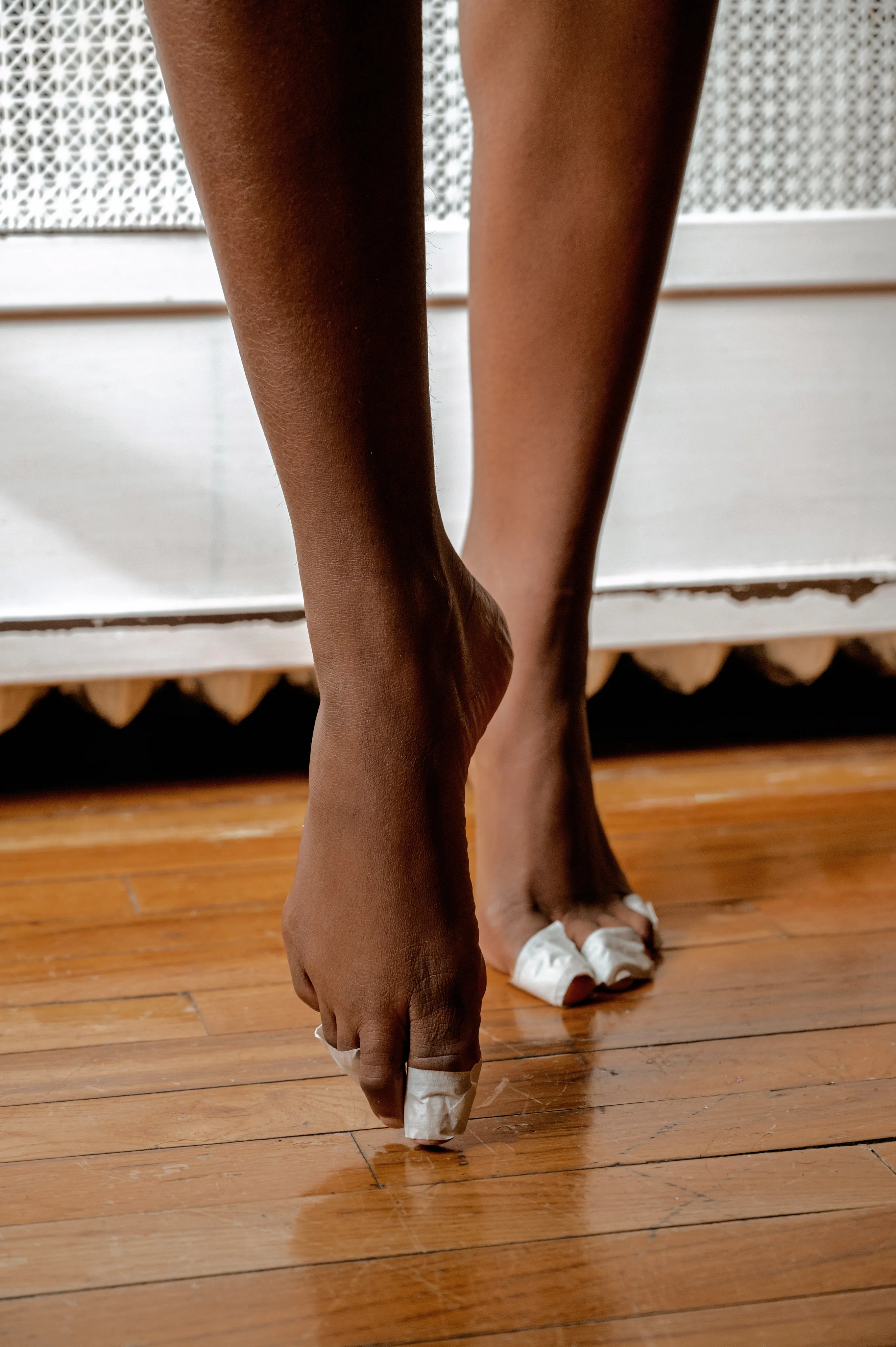
Black communities have been paying the cost of their own exclusion for generations. The institution created the exclusion and the black body inherited the labor of correcting it. We know how to adjust. How to alter. How to make do. How to enter spaces that did not imagine us, and once inside, figure out how to remain. While there is resilience in that, I often wonder what it has actually cost us to be so good at surviving things that should’ve changed a long time ago. Ten Toes Down began as a reflection on the absence of proper representation for black and brown bodies in ballet. But the deeper I moved into the work, the more I began to see our pointe shoe as something larger. For generations, the standard pointe shoe was made in shades meant to disappear against white skin. Black dancers ritually painted, pancaked and altered their shoes. Their bodies were capable, discipline was present, and artistry undeniable, yet they were still forced to adjust themselves. I think black communities are still carrying this.
This is a photo of me holding a binder prepared by genealogist. It features newspaper clippings and early 20th century photos of my ancestor, Deliah Turner Hooper Thompson; scanned copies of diary entries written by my ancestor's enslavers that reference my ancestor; and a copy of an oral history collected from a woman who was enslaved by the same family and possibly related to my ancestor. These artifact were returned to my family, through me, in an act of reparations and reconciliation which began in 2020, when a descendant of my relative's enslaver, found my family tree on Ancestry.
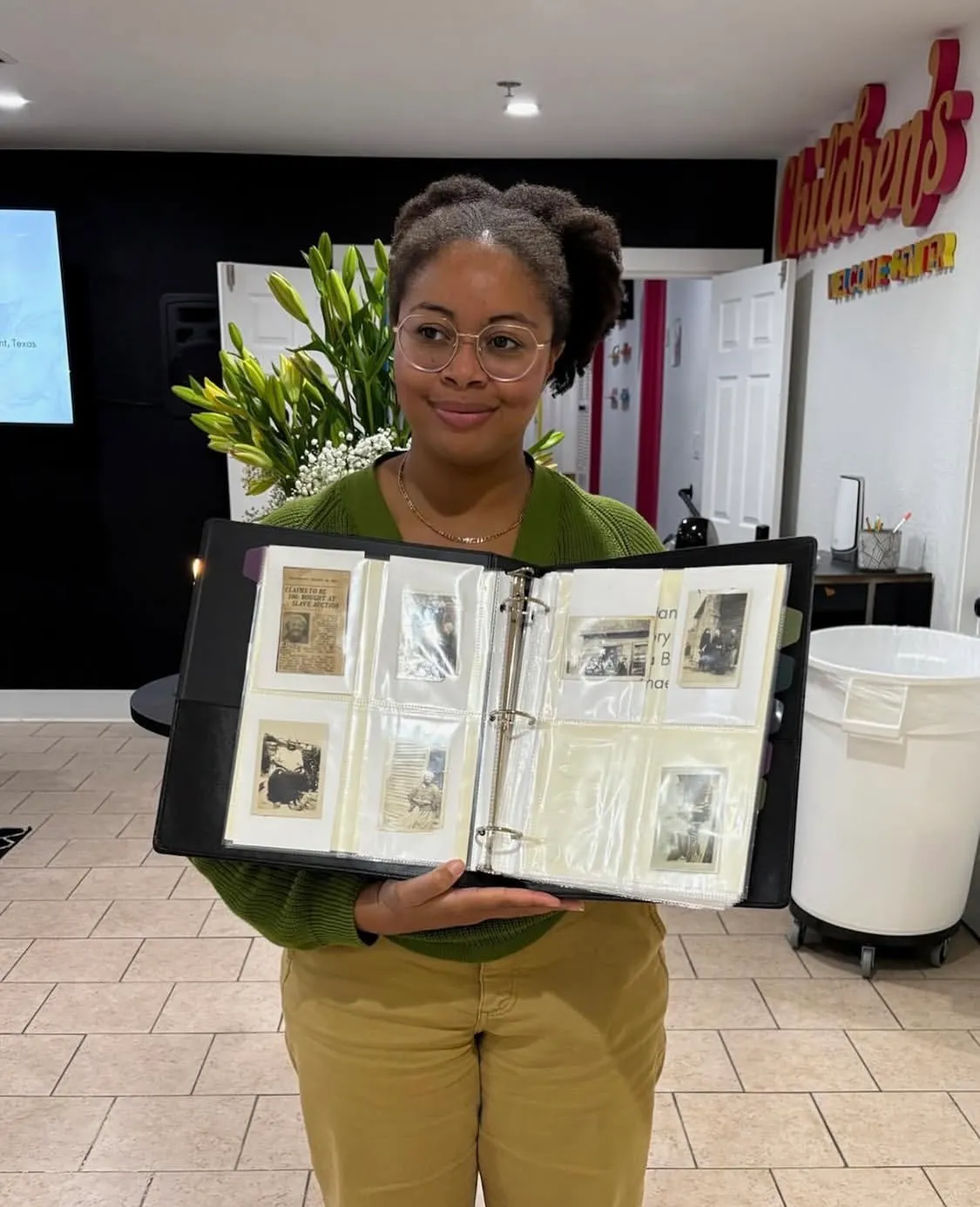
This is a photo of me holding a binder prepared by genealogist. It features newspaper clippings and early 20th century photos of my ancestor, Deliah Turner Hooper Thompson; scanned copies of diary entries written by my ancestor's enslavers that reference my ancestor; and a copy of an oral history collected from a woman who was enslaved by the same family and possibly related to my ancestor. These artifact were returned to my family, through me, in an act of reparations and reconciliation which began in 2020, when a descendant of my relative's enslaver, found my family tree on Ancestry.
In 2020, I hired a genealogist (a fabulous Black woman named Anna Guy-Burroughs) to do some digging into my family tree. Through her work, a white woman found my Ancestry tree and reached out to my genealogist, saying that her family had enslaved one of my ancestors, Deliah Turner Hooper Thompson, who lived for somewhere between 109-113 years and raised 5 generations of their family, including a man now praised as a Founding Father of Fort Worth, TX. This family had diary entries mentioning my ancestor, photos of her, and a newspaper clip announcing that her enslavers had entered her into the Guinness Book of World Record for oldest person alive. The woman descendant from this family scanned and emailed photos of these family heirlooms. She said she had been doing a lot of work around racial healing and wanted to meet. I took a few years to do therapy, grieve for my ancestor, and reflect on whether or not to meet. Ultimately, I said yes, after watching Trump and his hateful, divisive rhetoric win another election. This country needs healing, and I believe my lived experience could serve as a model of what reparations might look like. The family and I met on the condition that her family return photos of my ancestor to me. We met in a public event moderated by a local journalist, and arranged by my genealogist, whose church hosts monthly discussions on racial healing and reconciliation. Afterwards, I immediately donated my artifacts to a Black history museum / community archive in Fort Worth, Texas.
This photo shows me holding photos and writings about my ancestor, an enslaved woman whose image and story continued to be in the possession of her enslavers for another 100 years following her death. The process of returning her to our family created a new bond, one between descendants of enslaved and descendants of enslavers. Members of this White family and I have met and spoken a few more times since I received these photos. Our conversations are always awkward, if not a bit painful; but, I commend this family for opening the door towards a kind of reparations that is deeply intimate, personal, and necessary for the growth of a 250-year old nation that still struggles to reckon with the foundational legacy of slavery.

My recording, The Space Between Breath and Beat, is a reflection on my mother's life, her extraordinary capacity for selflessness, and the hidden costs of a lifetime spent caring for others. It explores the ways in which strength, particularly among mothers and Black women, can become both a source of survival and a source of harm when it is constant, expected, and unquestioned.
Through memories of my mother and her unwavering commitment to family and community, I reflect on how caregiving became central to her identity, often at the expense of her own health, desires, and well-being. After her passing, I found myself asking difficult questions about what she needed, what she sacrificed, and what parts of herself were never given the same care she so freely offered to others.
The recording also examines how seeking to understand my mother as a woman—not only as my mother—has reshaped my understanding of myself, my own motherhood, and the legacy I hope to pass on. Ultimately, it is a reflection on inherited expectations, unspoken harm, and what meaningful repair might look like for the women who are taught to give everything away.
My audio submission connects to reparations, repair, accountability, and unresolved harm in the United States through the lived experience of Black women whose labor, care, and survival have historically been extracted, expected, and under-acknowledged.
At its center is my mother’s story, which reflects a broader national pattern: the normalization of Black women as endlessly giving figures—strong, reliable, and self-sacrificing—without equal protection, rest, or care in return. In my recording, I examine how this expectation shaped her life, particularly how her identity became rooted in caregiving for others while her own health, desires, and wellbeing were quietly deferred. Her strength was praised, but the cost of that strength was rarely named or addressed.
This becomes a question of harm that extends beyond one family. It reflects a cultural and systemic failure to recognize Black women as full human beings rather than infrastructure for others’ survival. The absence of care for her own body and needs, even in the face of serious health conditions, speaks to a larger pattern of neglect that is deeply tied to racialized and gendered expectations in the United States.
My work belongs in this archive because it asks what repair looks like when harm is not always overt, but cumulative and normalized over a lifetime. It also asks what accountability means when the damage is embedded in cultural ideals of strength and selflessness.
Ultimately, the recording contributes a larger question: how do we repair a society that celebrates women for what they endure, but rarely asks what they lose in the process—and what would it take to make their wholeness, not their sacrifice, the measure of value?
After hearing my story, I hope listeners understand that strength is not a simple or one-dimensional virtue, especially when it is shaped by cultural expectation, gender, and race. What is often praised as resilience can also conceal long-term depletion when a person is consistently required to give without being equally cared for in return.
I want listeners to see my mother not only as an individual, but as part of a broader pattern experienced by many Black women whose lives are organized around service, caregiving, and endurance. Her story is not unique in its structure, but it is deeply personal in its cost. I hope it encourages people to reflect on how often we overlook the internal lives of those who appear “strong” and how rarely we ask what that strength requires of them.
I also hope listeners understand how this reflection reshaped me as a daughter and as a mother. In learning to see my mother as a full woman, I have had to reconsider how I define care, identity, and love within my own life.
Ultimately, I hope the story leaves listeners with a deeper awareness that repair requires more than recognition of harm—it requires a reimagining of what we value, and a commitment to seeing women as whole people, not just the roles they fulfill.